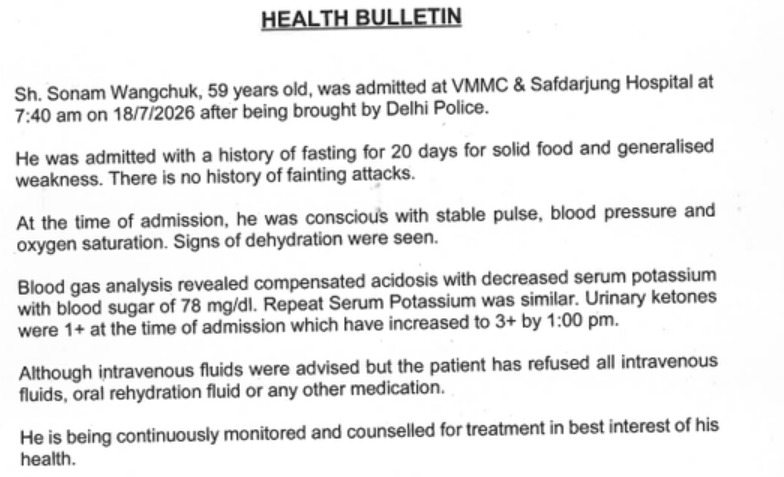

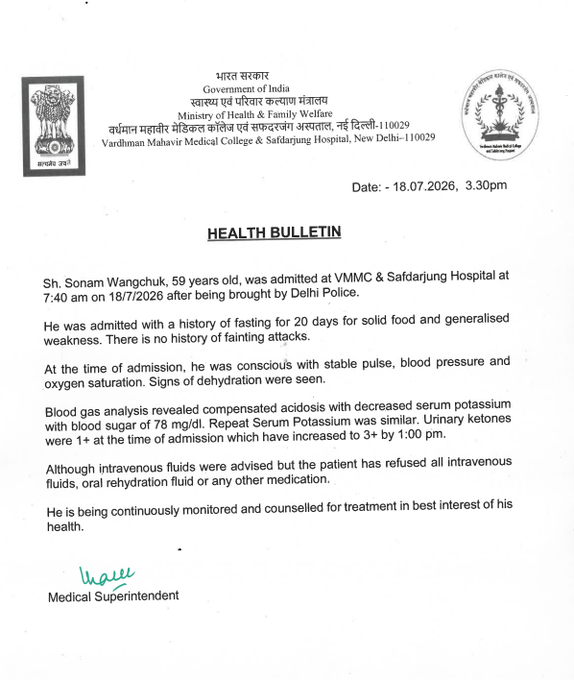
Activist Sonam Wangchuk was admitted with dehydration, low potassium levels and elevated urinary ketones caused by prolonged fasting. It said he has refused medication, intravenous fluids and oral rehydration and remains under close medical observation, according to Safdarjung Hospital.
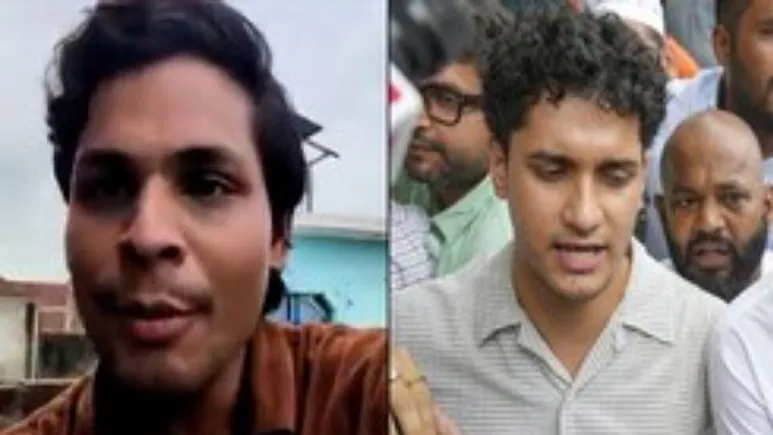
CJP founder Abhijeet Dipke has alleged that Delhi Police is planning an overnight crackdown on the protest and has urged supporters to join a night vigil at Jantar Mantar ahead of the planned 20 July Parliament march.
Earlier, Wangchuk, who had been on a 21-day hunger strike, was taken by Delhi Police from Jantar Mantar to Safdarjung Hospital. Dipke, who has since begun an indefinite hunger strike, alleged that Wangchuk was removed forcibly.
However, Wangchuk’s personal physician, Dr Nitin Dighe, questioned the hospital’s findings, while his wife, Gitanjali J. Angmo, alleged that hospitalisation was unnecessary and sought his transfer to another hospital.
Wangchuk has been fasting to demand an investigation into the alleged NEET paper leak and the resignation of Union Education Minister Dharmendra Pradhan. His doctors say he has lost 9.5 kg since the protest began.
Wangchuk’s health bulletin issued from Safdarjung Hospital…
Three students continue hunger strike alongside Wangchuk
In addition to Sonam Wangchuk, three members of the All India Students Association (AISA) Neha, Amin and Manish have been on a hunger strike at Jantar Mantar for the past 21 days and continue their protest.
According to organisers, Neha has been advised to undergo hospitalisation after developing severe hypoglycaemia, while the health of Amin and Manish has also deteriorated.
Hypoglycaemia is a condition in which blood glucose levels fall significantly below normal. A blood sugar level of below 70 mg/dL is generally considered hypoglycaemia.


 By
By