
Dramatic scenes unfolded at Delhi’s Jantar Mantar on 18 July as Delhi police removed activist Sonam Wangchuk from his protest site and shifted him to Safdarjung Hospital after 21 days of an indefinite hunger strike.
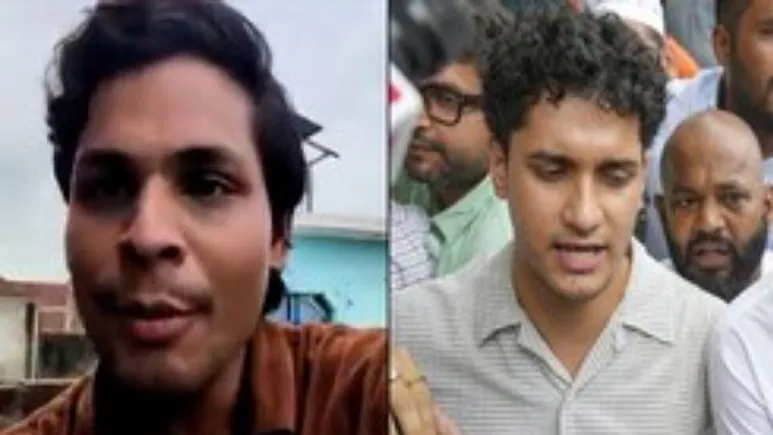
Soon after, Cockroach Janata Party (CJP) founder Abhijeet Dipke announced that he would continue the agitation with his own indefinite fast.
To understand where the agitation may be headed, Bhaskar English spoke to political experts & senior journalists Neerja Chowdhury and Rasheed Kidwai.
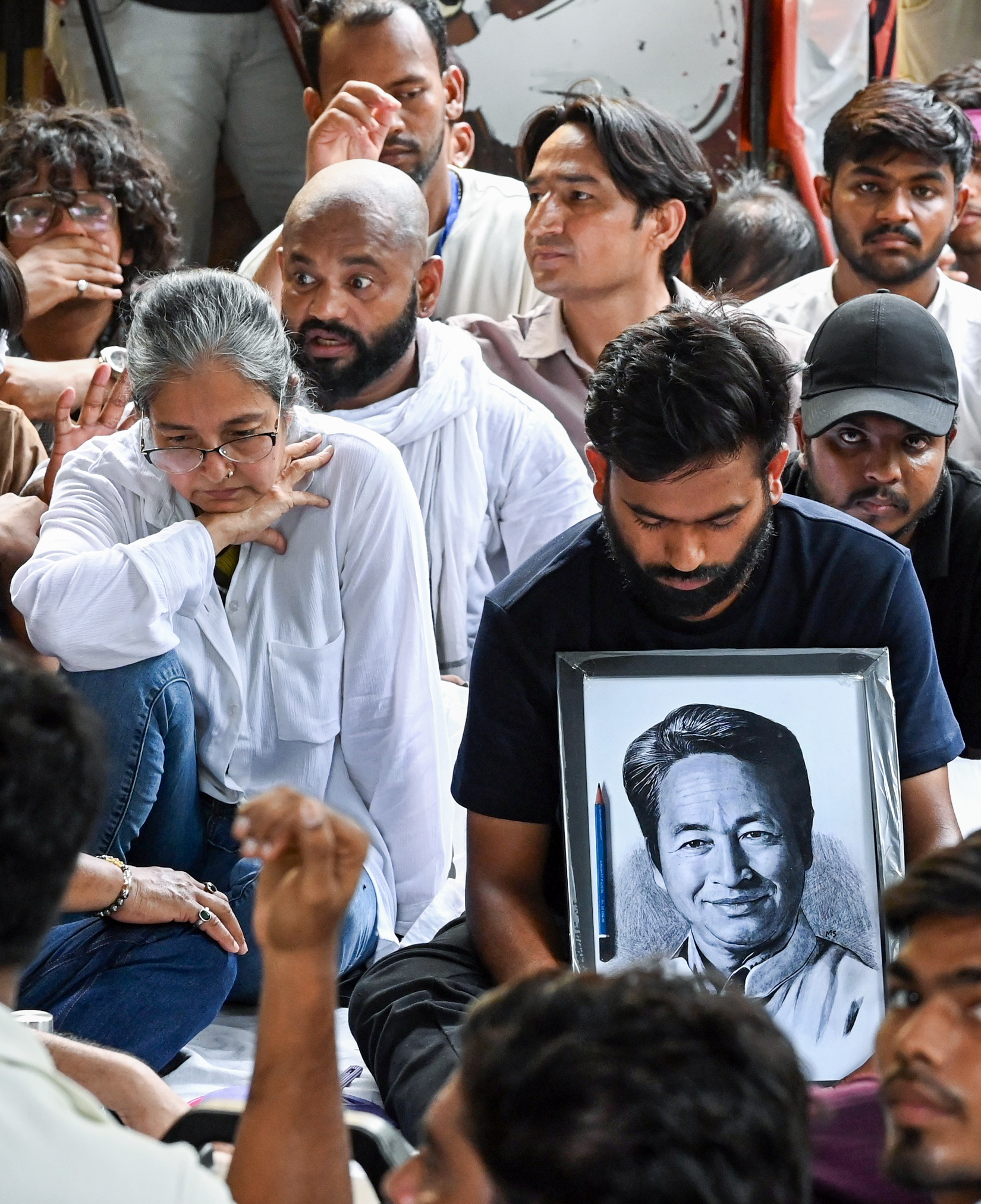
CJP founder Abhijeet Dipke holds a portrait of Sonam Wangchuk after launching his own indefinite hunger strike following Wangchuk’s hospitalisation, at Jantar Mantar in New Delhi on 18 July.
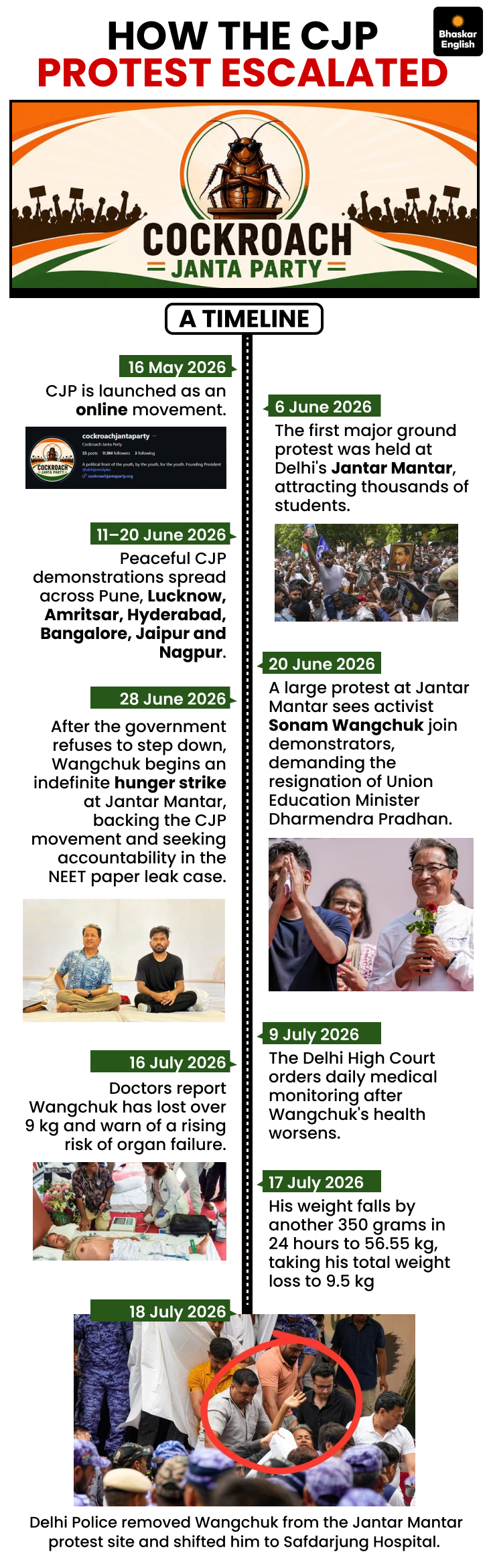
Before looking at other questions related to Sonam Wangchuk’s protest, it is worth understanding the timeline of the CJP protest and Wangchuk’s hunger strike in the graphics below…
Will Sonam Wangchuk be force-fed?
There is no confirmation yet that Sonam Wangchuk will be force-fed.
- He was shifted to Safdarjung Hospital after the Delhi High Court directed authorities to monitor his health and intervene if necessary. A petition seeking force-feeding was filed in court, citing concerns over his deteriorating health.
- For now, he remains under medical observation, and no decision on force-feeding has been announced.
- However, Wangchuk’s wife, Dr Gitanjali J. Angmo, has opposed any such move. “I forbid them from administering anything without my consent,” she said after he was shifted to Safdarjung Hospital. She added that Wangchuk should not be given any medicine, food or intravenous treatment without the consent of his family and doctors.
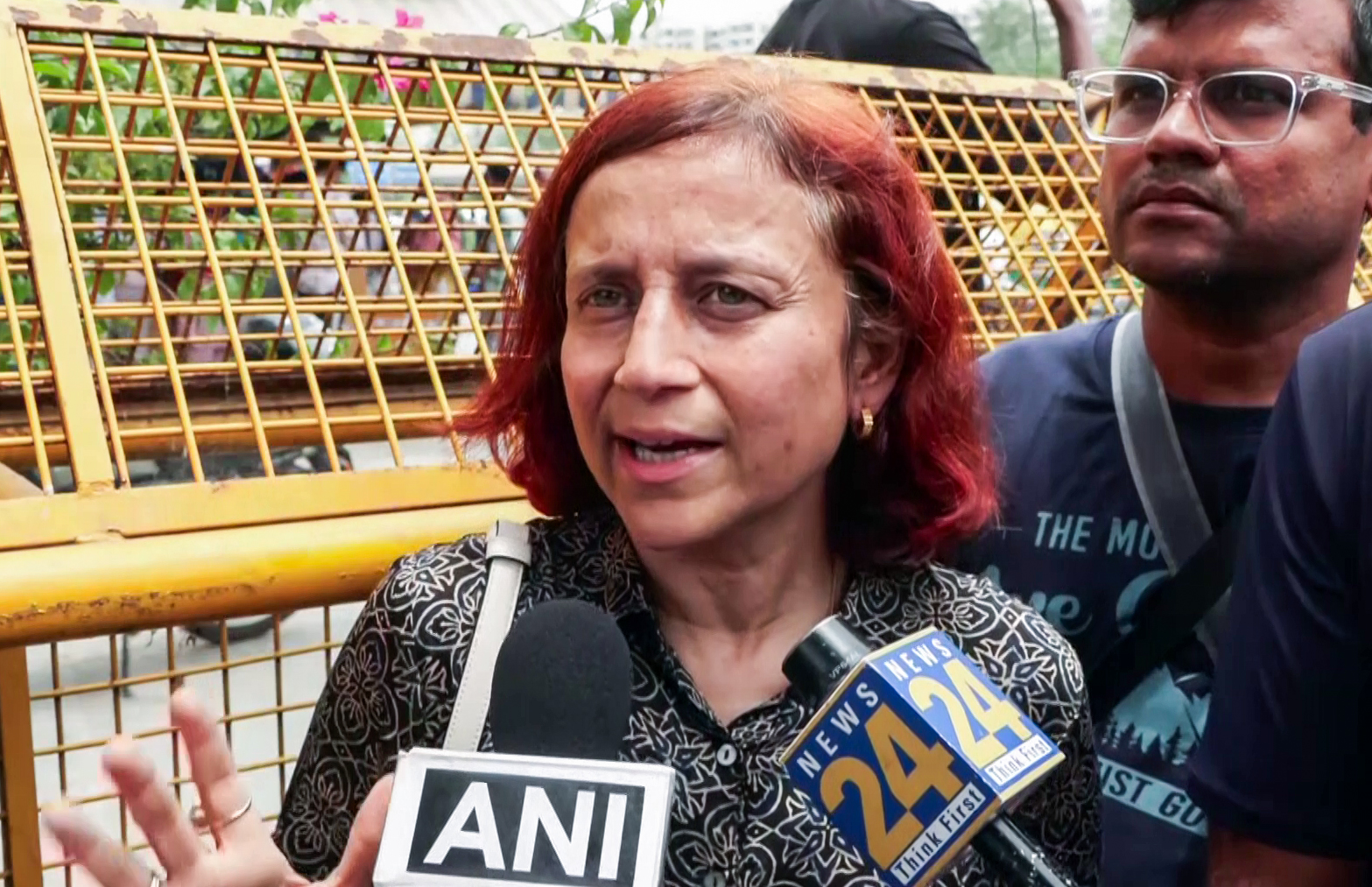
However, Wangchuk’s wife, Dr Gitanjali J. Angmo, has opposed any such move. “I forbid them from administering anything without my consent,” she said after he was shifted to Safdarjung Hospital.
Why did Abhijeet Dipke begin his hunger strike now instead of earlier?
After activist Sonam Wangchuk was taken to Delhi’s Safdarjung Hospital following 21 days of an indefinite hunger strike, Cockroach Janata Party (CJP) founder Abhijeet Dipke announced he would continue the protest by launching his own indefinite fast at Jantar Mantar.
- Political experts say Dipke chose to begin his fast only after Wangchuk was removed from the protest site, signalling that the movement would continue despite the authorities’ action.
- The move also underlines CJP’s determination to press ahead until its demands are met.
- Some observers also argue that the transition gives the BJP an opportunity to portray the protest as divided.
Could the planned 21 July flag march increase pressure on the government to seek Pradhan’s resignation?
The Cockroach Janata Party (CJP), which has been protesting at Delhi’s Jantar Mantar, has called for a march to Parliament on Monday, the opening day of the Monsoon Session.
- The proposed march is significant as it could increase security concerns for both the Delhi Police and the Centre, with the protest moving closer to Parliament.
- It will also come days after Sonam Wangchuk was allegedly forcefully removed from his hunger strike, a development that has drawn fresh attention to the agitation.
- However, there has been no official confirmation that the organisation has sought permission from the Delhi Police to hold the march.
- Moreover Delhi police say, ‘even if CJP asks for permission for the march the police will not grant it to maintain security arrangements during Parliament’s monsoon session.’
Senior journalists Neerja Chowdhury and Rasheed Kidwai do not believe the proposed flag march is likely to have any major political impact or increase pressure on the government to seek Education Minister Dharmendra Pradhan’s resignation.

 By
By